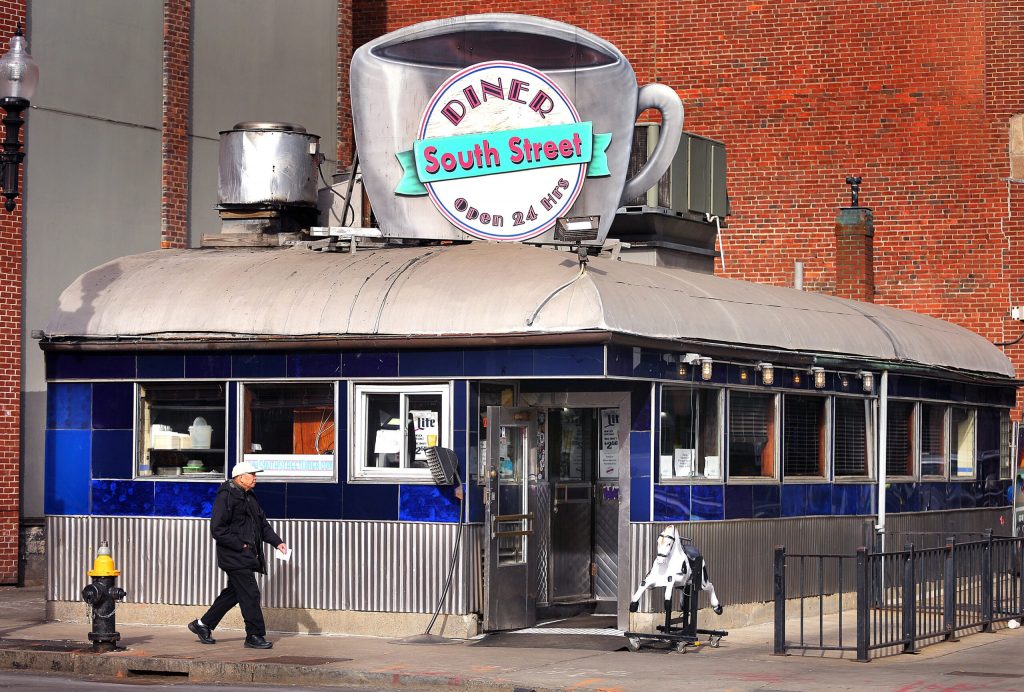
As a frequent visitor of South Street Diner, Boston’s historic 24 hour greasy spoon, I had the pleasure of calling for “the usual” and diving into an omelette just minutes later.
Breakfast after breakfast, “the usual” was ordered and happily consumed. It became my default behavior. I was hooked.
After an apartment change and a six month South Street hiatus, I returned to the diner to find a new chef and tweaked menu behind the same friendly waitstaff. The usual order (she remembered!) was met with runny eggs, a bigger bill, and a search for a new breakfast spot.
Quality changes, prices move and customers update.
A Boston staple or default option?
“Same as last week?”
Small businesses today rarely have enough time to measure the quality and cost of their many product inputs. Even more rarely do they find time for a nice breakfast. Yet, without keeping a keen watch over their vendors, and how the market is responding, businesses run a real risk of losing clients. Responsible management of the supply chain has a major impact on future happy customers.
What is the supply chain? Though Websters defines it as an utterance used to signal relevance, we know it as a network of human-made transactions. We have discovered, much to our delight, that emotion beats out rationality in most of these decisions.
Retailer interviews confirmed our sneaking suspicion that ordering the “same as last week” is a great substitute for inventory optimization. The sales and delivery team have families, bring donuts, and offer banter on last night’s game. Why adjust one’s ordering pattern and risk losing insight on the MLB lockout?
Laziness means risk
As it turns out, customers’ tastes change. In fact, it is highly unlikely that the best selling product is still the fan favorite just three months later (83% chance of change in top performing product). Same-as-last-weekers run a serious risk of tying up cash flow in slow inventory, missing out on future winners, and turning to the discount crutch.
At Lendica, we sort on smart operators. Our Vigilance Score, one of several behavioral indicators, uses vendor purchase invoices to sniff out the same-as-last-weekers. We compare historical purchase behavior relative to future sales, on a per product basis. The underwriting model, trained on millions of transactions, penalizes lazy ordering and rewards vigilant decision-makers.
Future free cash flow, or cash generated net of goods and expenses, is directly impacted by laziness in the supply chain. Less vigilance and slower inventory turn negatively affects cash flow and makes it harder for borrowers to pay back their debt on time.
When we can separate lazy and vigilant operators, we can optimally price the risk of each financing – especially every invoice financed using Lendica’s PayLater.
And, of course, better risk pricing means better rates for our customers!
For a more detailed explanation on the Vigilance Score and some other behavioral indicators (Helter Skelter Score, Generosity Score, Diligence Score, etc.), click here to schedule a call.
A supplier and its buyer have the same goal: get the best possible product to the end customer. So why don’t all buyers and sellers simply get along?
In a perfect world, a supplier should seek to maximize value to its buyers. Its customers’ success invariably leads to more orders, larger SKU counts, and, if supplier executives are lucky, a bigger paycheck come Christmas. Buyers ought to feel the same way. A fair deal to a vendor can lead to a stronger supply chain with less disruptions. Afterall, if a supplier runs out of cash and stops supplying, their buyer runs that same risk.
At Lendica, we don’t always witness such a smooth supply-chain scenario. We have found the breakdown typically begins with net seller terms.
Setting net seller terms, a topic we discuss ad nauseum, is often a function more of art than science. The option to pay after delivery requires a complex calculus that weighs the perceived credit risk of the buyer, one’s current financial stability, and the potential for future business. The heuristics involved in this decision-making process likely warrants a separate post.
We instead explore a separate, critical issue in supplier relations. Once a customer is offered NetX, how do you assure it doesn’t become NetY? Said differently, how do you get your customers to pay you on the agreed upon date?
McDonald’s Case-let
First, a brief divergence to dissect a supply chain maven, Ray Kroc. For those turned off by Kroc’s portrayal in the movie The Founder, it’s worth noting the McDonald’s entrepreneur employed impressive diplomacy and effectiveness in managing his supply chain.
In McDonald’s early days, the burger (read: real estate) tycoon struggled to maintain positive cashflow during an aggressive expansion period. Despite a relatively simple menu of burgers, milk shakes and fries, Kroc and team had to corral an extensive vendor network to meet strict quality control. The fast-food chain sourced buns, for example, from several bakeries across the country – each of which were scrutinized over size, taste, and even sesame seed count.
The french fry was McDonalds secret weapon during early-days expansion.
Many pressured Kroc to bring manufacturing in-house. Even your average MBA could calculate the potential cost savings from a “simple” vertical integration. Kroc wouldn’t listen. He knew that his business’s core competency was retail and felt that the minute you begin “selling the product to yourself” is when you start flaking on quality.
Instead, he put trust in his vendors to create the best product at a fair price and, when he found a vendor that was to his liking, sought ways to grow the relationship instead of threatening it. (Kroc famously pulled a baker out of early retirement and moved him to California to support west coast expansion – a deal that paid off for both companies). Supplier goodwill was one of the key drivers to McDonald’s successful scale in the 60s and 70s – a considerable loan from several suppliers even saved the business in the early days. The goodwill, of course, was repaid by McDonalds’ with massive contracts and timely payments.
In short, Kroc’s long-term trust in his suppliers, and vice versa, was primarily a fair exchange which greatly benefited all parties involved.
Ability vs. Willingness
Today’s suppliers are not typically enamored by the idea of extending a loan to a struggling buyer. Yet, a poorly managed net-seller program is effectively a zero-interest loan! When a buyer receives goods ahead of their payment, the seller has limited recourse – aside from holding future orders and pleading pretty-pleases. The buyer is taught to conserve cashflow at all costs – each with their own set of tricks and tales to push back sending funds. Each day that passes represents a higher chance of default and an implied discount on the sale.
Lendica Lens 🔎
Interestingly, the buyer often has the ability to pay for the goods but lacks the willingness to do so.
Our analysis of tens of thousands of invoices suggest that buyers oftentimes are able to make a payment but still delay several days past due. We attribute lack of buyer willingness to a variety of behavioral traits including the Pain of Paying (Zellermeyer) and the Availability Bias (Kahneman/Tversky) – buyers are constantly introduced to new manufacturers and undervalue the high switching costs associated with changing a supplier or bringing operations in-house.
As a result, buyers may apply implicit discounts to their supplier relationships and, perhaps without realizing, justify the delayed payments beyond the agreed upon terms (e.g pay a Net7 invoice in fourteen days). Advances in digital marketing may increase the occurrence of the Availability Bias and, in parallel, decrease a buyers’ willingness to pay.
The Savvy Supplier
It would appear that, short of sorting on Ray Kroc enthusiasts, good buyer management protocol is a major challenge. Finding buyers is hard enough, let alone those willing and able to pay according to schedule. Lending money to struggling customers is not always feasible (or wise) but taking risk to support their growth can prove to be a profitable endeavor. How does a savvy supplier manage the process?
Using a supply chain management partner, such as Lendica, is oftentimes the best approach. Here are a few key benefits:
Dynamic Seller Terms. It is important to remember that each invoice is a unique transaction which requires a detailed analysis. This includes consideration of buyer credit risk, your current cash position, and the likelihood of future orders. Supply chain management tools offered by Lendica allow sellers to treat each invoice as a unique transaction and helps price the risk accordingly.
Leverage the Pain of Paying. The cost of a 5c bag at many grocery stores is by no means a ploy to grow revenue. Instead, it is a clever, state-mandated initiative to incent shoppers to reduce plastic bag consumption. Five cents is not a financial hurdle that deters most customers, but the sheer act of introducing another cost has proven to be a successful measure to changing behavior. Your supply chain management tools should include nominal late fees and a variety of nudges to alter buyer behavior. Lendica has seen several cases where the pain of paying even a $25 late fee can speed up collection time on invoices, regardless of order size.
Focus on Customer Success. The availability bias should work to your advantage. Most suppliers are in constant communication with their customers to share updates on their products and promote new ideas. Challenges may arise when those updates are dominated by collecting overdue invoices. This shifts the tone of the discussion and can lead buyers to negatively update. Outsourcing your accounts receivable ensures prickly conversations are handled outside the organization and dramatically reduces the chance of negative buyer sentiment.
Finding a long-term, consistent buyer is the goal of any supplier. Realizing this goal requires a deep understanding of risk pricing and buyer behavior. The McDonalds’ team benefitted from their visionary leader Ray Kroc and his unique perspective on vendor management. Most suppliers don’t have the fortune of securing contracts with an icon.
For suppliers that want to help buyers manage their cashflow and support growth – like the early-days McDonalds’ vendors – while still effectively managing their own business, a supply management tool like Lendica is often the answer. Providing net terms, sending small nudges, and outsourcing collection calls can help improve buyer relationships and, most importantly, allow the supply chain to focus on creating a winning product.
What are supplier terms? In many industries, it is common for suppliers to provide net 45 day terms. Simply put, the customer is allowed up to 45 days to pay the invoice even after the product has been ordered or delivered.
Why do suppliers offer terms? Cash is king! A common adage passed around business school classrooms (zoom chatrooms), the concept of preserving cash at the expense of financing fees or supplier relations is a focal point of CFOs everywhere. The longer your customers can wait to pay for your goods, the more money they can sink into growing their business.
What do I need to provide supplier terms? A balance sheet (cash is king, remember?)! We would all love to be generous and hand out terms like it’s Halloween, but sadly it is quite expensive and requires significant cash balances. Remember, customers don’t always pay and your business still needs cash to run its operation. A simple rule of thumb when considering offering terms: you should have access to enough cash on your balance sheet to continue operations if 20% of your customers don’t pay!
How else can I provide supplier terms? If you are running tight margins or do not have a full-time A/R department, it might be better to outsource this function to experts. Third-party finance companies, like Lendica, are designed to help businesses of all sizes tap external balance sheets to make it easier to offer terms. Lendica was built specifically to handle the underwriting, funding and collection of payments/invoices in all high growth industries.
Sounds great… so how does it work? Your customers who ask for supplier terms can instantly qualify with Lendica. When you share the invoice along with basic customer details with Lendica, your customer receives a simple link to share a bit more information on their business. After completing the two minute application, Lendica’s system processes the data and presents them with an offer. Once accepted, Lendica pays you for the invoice on day one, you fulfill the order, and your customer pays Lendica over simple installments. That’s it!
How do I get started? Lendica’s embedded finance technology may already be available with your inventory management system, point of sales provider, or bank. Check our list of partners, here. If not, you can contact us directly to set up your own, dedicated supplier term portal.